
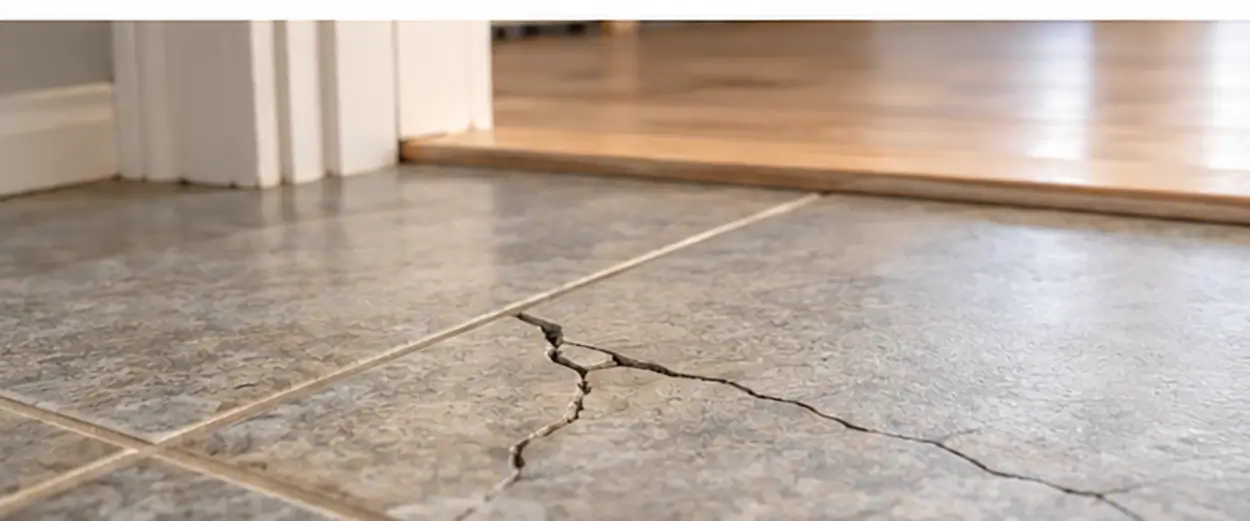
A cracked floor tile can be frustrating, especially when the rest of your flooring looks perfectly fine. You might notice a thin crack across a single tile, a chipped corner, or cracks affecting several tiles throughout the room.
So, why do floor tiles crack?
The cause isn’t always easy to identify. Cracks can develop from dropped objects, movement beneath the flooring, or improper installation. Understanding these possible causes can help you determine whether a simple repair is enough or if replacing the flooring is the better option.
What Causes Floor Tiles to Crack?
1. Movement Beneath the Flooring
One common cause of cracked floor tiles is movement in the surface beneath them. Because tile is rigid, movement or bending beneath it can place stress on the flooring. Cracks in a concrete slab may eventually appear through the tile above, a problem known as reflective cracking.
Wood subfloors can also contribute to damage if they flex more than the tile installation can accommodate. If cracks extend across several neighboring tiles, the underlying surface may need closer inspection.
2. Heavy Impact or Dropped Objects
Sometimes, a cracked tile is simply the result of an accident. Dropping a heavy pot, tool, or other hard object can chip or fracture the tile surface. This type of damage usually affects a single tile or a small area rather than several tiles.
When the surrounding flooring remains secure, replacing the damaged tile may be a reasonable solution.
3. Improper Tile Installation
A durable tile floor requires proper surface preparation, suitable bonding materials, and correct installation techniques. If the mortar doesn’t provide enough support or the surface beneath the tile is unsuitable, the flooring may become more vulnerable to cracks or loosening over time.
A hollow sound when tapping a tile may suggest a bonding issue, although it doesn’t always indicate a problem. If several tiles sound hollow or begin loosening, a professional inspection may help identify the cause.
4. Expansion and Contraction
Flooring materials respond to changes in temperature and moisture. Properly placed movement joints help tile floors accommodate these changes. Without enough space to accommodate this movement, stress can build within the flooring and contribute to cracked grout, damaged tiles, or tiles lifting from the surface.
This is especially important in larger tiled spaces and areas exposed to significant temperature changes.
5. Moisture Problems Beneath the Floor
Moisture can contribute to tile damage when it affects materials beneath the finished surface. For example, a moisture-sensitive wood subfloor may swell or deteriorate, creating movement that stresses the tile installation.
However, a cracked tile doesn’t necessarily mean there’s a moisture problem. Identifying what’s causing the damage can help determine whether the tile needs repair or replacement.
Can a Cracked Floor Tile Be Repaired?
Not every cracked tile requires replacing the entire floor. If the damage is limited to one tile and the surrounding flooring remains in good condition, replacing the individual tile may be possible.
However, recurring cracks or damage affecting several areas may indicate a larger problem. Watch for these warning signs:
- Multiple cracked tiles: Cracks affecting neighboring tiles may suggest movement beneath the flooring.
- Loose or lifting tiles: These may indicate bonding or movement problems.
- Cracked grout: Repeated grout damage may point to stress within the flooring.
- Recurring damage: Cracks that reappear after repairs may mean the underlying cause hasn’t been resolved.
These warning signs don’t necessarily mean the entire floor needs replacement, but they should be evaluated before repairs begin.
When Does Tile Floor Replacement Make More Sense?
Tile floor replacement may be the better option when cracks affect a large area, tiles repeatedly become loose, or the underlying problems cannot be resolved through individual repairs.
Replacement can also be a practical choice when matching tiles are unavailable or you’re already planning a kitchen or bathroom renovation.
Before installing new flooring, it’s important to understand why the existing tiles cracked. Otherwise, similar problems could develop again if the underlying conditions remain unresolved.
What Should You Do When You Notice Cracked Tiles?
Start by checking how much of the floor is affected. Look for loose pieces, damaged grout, or noticeable changes in floor height.
Although filling a visible crack may improve its appearance, it won’t necessarily address movement or bonding problems beneath the tile. Understanding the cause of the damage is important before attempting repairs.
If the damaged tiles have loose pieces or sharp edges, avoid walking on the affected area until it can be assessed. For recurring or widespread cracks, a qualified flooring professional can help determine whether further investigation is needed. Significant moisture or suspected structural problems may require an appropriate specialist.
How Can You Reduce the Risk of Cracked Tiles?
While no tile floor is completely immune to damage, proper installation helps reduce avoidable problems.
Before a new tile is installed, the supporting surface should be evaluated for stability and suitability. Appropriate bonding materials, mortar coverage, and movement joints are also important.
If the existing concrete slab has cracks, the installer may need to use a suitable crack-isolation system, depending on the condition of the surface and the manufacturer’s requirements.
A long-lasting tile floor depends on more than choosing attractive materials. Proper preparation and installation are just as important in helping prevent future damage.
Explore Your Tile Flooring Options With Flooring Pros
Cracked floor tiles don’t always mean the entire floor needs replacement. However, widespread damage, recurring cracks, or underlying flooring problems may make replacement the better option.
If you’re considering replacing damaged tile or updating your flooring, Flooring Pros can help you explore tile flooring options that suit your home’s style and everyday needs.
Visit Flooring Pros to request a free in-home estimate and discuss your flooring project.