
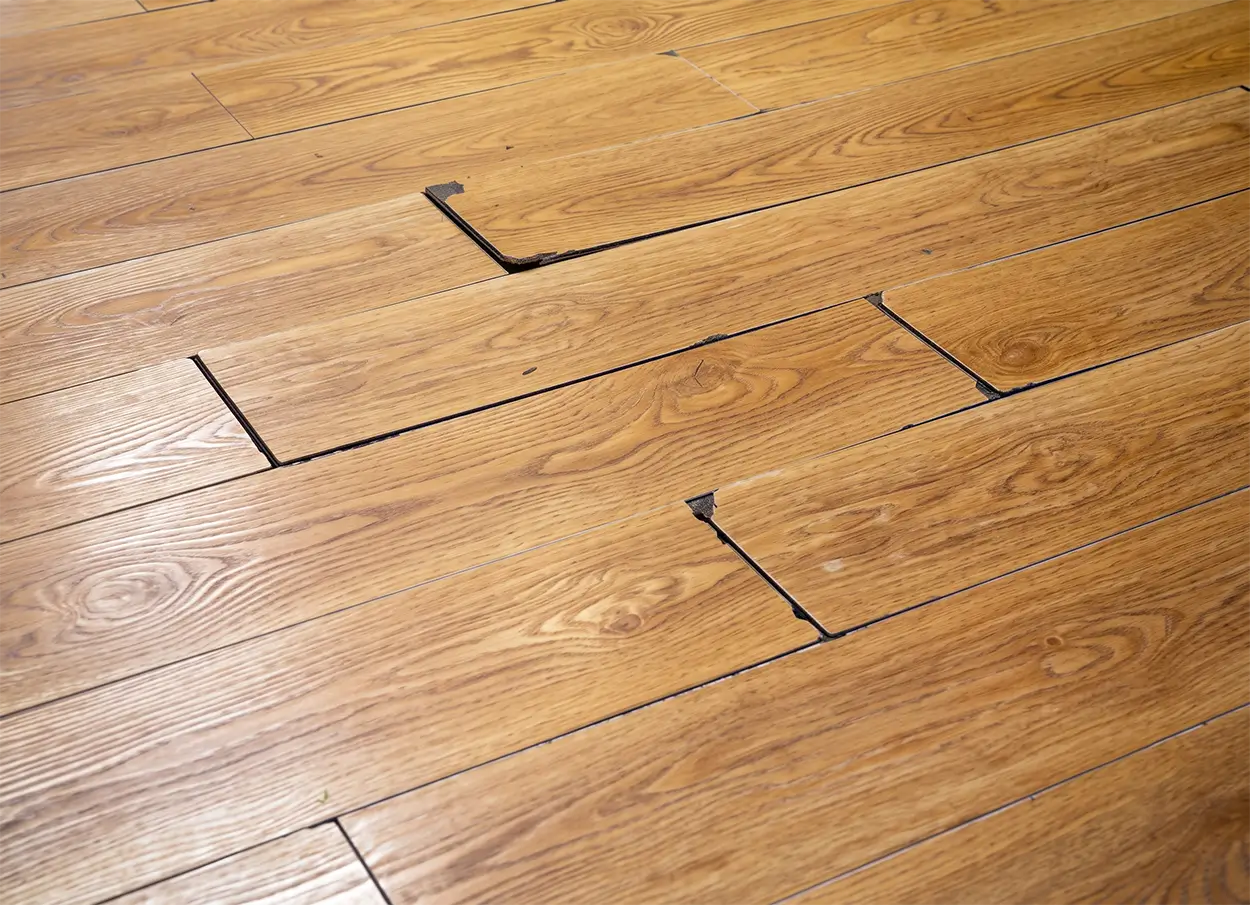
Vinyl plank flooring has become a go-to choice for many homeowners. It offers the look of hardwood with less maintenance while holding up well to everyday wear. Still, problems can develop when something goes wrong beneath the surface or during installation. One of the most common issues is buckling in vinyl plank flooring, which can turn an otherwise smooth floor into an uneven and frustrating surface.
Buckling doesn’t usually happen overnight. It often starts small. A plank lifts slightly, or a seam looks off. If the cause isn’t addressed, that small problem can spread across a larger section of the floor.
What Causes Vinyl Plank Flooring to Buckle?
There isn’t just one answer to what causes vinyl plank flooring to buckle. In most cases, the problem results from a combination of factors that develop over time.
Moisture is one of the biggest factors. Even though many vinyl products are water-resistant on the surface, moisture underneath the floor can still create pressure. That pressure can push planks upward, especially if the subfloor absorbs water.
Temperature changes also play a role. Vinyl expands when it gets warm and contracts when it cools. If the flooring doesn’t have room to move, that expansion has nowhere to go.
Installation issues are another common cause. In fact, many cases of buckling can be traced back to preventable vinyl plank flooring installation mistakes.
Moisture Under the Surface
Moisture is often the first thing to check. Leaks, damp concrete, or even high humidity can affect what’s happening below the planks.
Water trapped beneath the floor weakens adhesives and can cause the subfloor to shift slightly. Over time, that movement leads to raised or uneven areas.
This is why fixing the source of moisture matters before replacing anything. Without that step, the same issue can return later.
Not Enough Room for Expansion
Vinyl flooring needs a small gap around the edges of the room. This gap allows the material to expand and contract without pushing against walls or cabinets.
When that space is missing or too small, pressure builds as the floor expands. That pressure often shows up as buckling in the middle of the room.
This is one of the most common vinyl plank flooring installation mistakes. It doesn’t take much for the problem to occur. Even a slight miscalculation can affect a large area once the flooring starts to move.
Subfloor Problems
What’s underneath the flooring matters just as much as what you see on top. A subfloor that isn’t level or clean can cause uneven pressure across the planks.
Small dips or raised spots may not seem like a big deal at first. Over time, they can lead to movement and separation between boards.
Before installation, the surface should be checked for moisture, leveled if needed, and cleared of debris. Skipping this step increases the risk that vinyl plank flooring will buckle over time.
Skipping Acclimation
Vinyl planks often need time to adjust to the indoor environment before installation. Bringing them straight from storage and installing them right away can lead to problems.
If the material expands or contracts after it’s already in place, it can create tension across the floor. That tension can show up as lifted edges or uneven sections.
Allowing the flooring to acclimate helps reduce that risk.
Heat and Sunlight Exposure
Rooms with large windows or direct sunlight can experience more temperature changes throughout the day. That repeated heating and cooling causes the material to expand and contract more often.
If the floor wasn’t installed with proper spacing, those changes can lead to buckling. Using window coverings or maintaining a steady indoor temperature can help reduce stress on the flooring.
How to Fix Buckled Vinyl Plank Flooring
Figuring out how to fix buckled vinyl plank flooring starts with identifying what caused it. Without that step, repairs may only be temporary.
If moisture is the issue, the source needs to be resolved first. If the subfloor is uneven, it may need to be repaired before reinstalling the flooring. If expansion space is missing, sections of the floor may need to be removed and adjusted.
In smaller areas, replacing a few planks may be enough. In more serious cases, a larger section of flooring may need to be lifted and reinstalled properly.
Because multiple factors can be involved, a professional inspection often saves time and prevents repeat issues.
Preventing Future Problems
Many cases of buckling can be avoided with proper planning. Taking time to prepare the subfloor, allowing the material to acclimate, and leaving enough expansion space all help reduce the risk.
Working with experienced installers also makes a difference. Proper installation is one of the best ways to avoid common vinyl plank flooring installation mistakes.
For homeowners considering vinyl plank flooring installation in The Woodlands, TX, and across the greater Houston area, understanding these details upfront can help prevent costly repairs later.
Get Reliable Vinyl Flooring Installation That Lasts
If you’re dealing with vinyl plank flooring buckling or planning a new installation, Flooring Pros can help you get it right from the start. We work with homeowners in The Woodlands and the greater Houston area, providing flooring solutions designed to perform well for years to come.
Whether you’re trying to understand what causes vinyl plank flooring to buckle, need guidance on how to fix buckled vinyl plank flooring, or want to avoid common vinyl plank flooring installation mistakes, our team provides clear, practical advice every step of the way. We also specialize in vinyl plank flooring installation in The Woodlands, TX, helping ensure your flooring is installed correctly the first time.
With free in-home estimates, accurate measurements, and experienced installers, Flooring Pros helps you avoid recurring issues and achieve results that last. Schedule your consultation today and protect your flooring investment.