
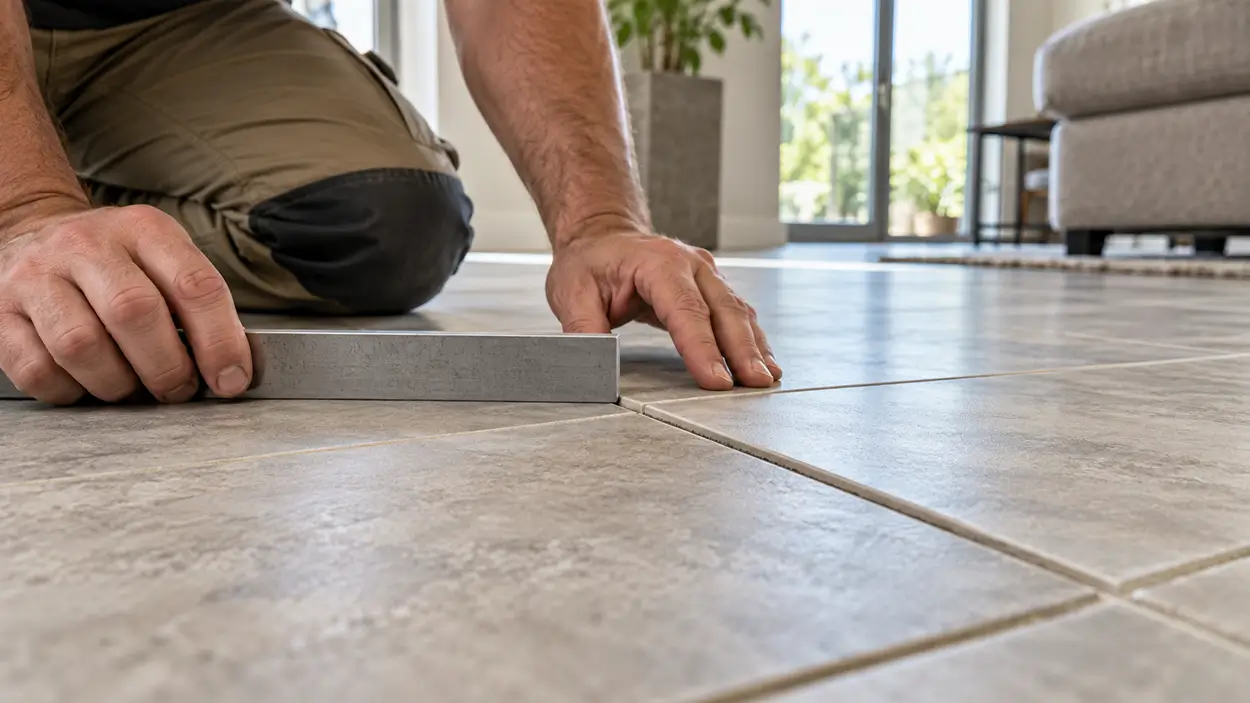
You notice it while walking barefoot across the kitchen: one tile edge feels slightly higher than the next. From across the room, the floor may look perfectly ordinary. Up close, a grout line catches the light, and suddenly you wonder whether the installation went wrong.
That height difference has a name: tile lippage. It is worth understanding before deciding whether the floor needs attention. Some variation can occur even in carefully planned work, but an uncomfortable raised edge deserves a closer look.
What Is Tile Lippage?
Tile lippage is the difference in height between the edges of neighboring tiles. It is not the same as a floor that slopes across the entire room. A floor can be generally level yet have individual tile edges that sit higher than those around them.
You may notice the difference when socks catch on an edge, furniture slides across a seam, or sunlight throws a small shadow along a grout line. Lighting can make minor variations more obvious, especially when windows or low-angle fixtures shine across the surface. Appearance alone, however, cannot tell you whether an installation falls outside an applicable tolerance.
Why Do Adjacent Tiles Sit at Different Heights?
The surface beneath the tile is one of the first things to examine. A substrate may be sound but not sufficiently flat for the particular tile being installed. When the base has humps or dips, keeping the finished surface even becomes more challenging. Large-format tiles can make substrate irregularities especially noticeable because they span more of the floor.
The tiles themselves also matter. Manufactured tile can have some allowable warpage, or slight curvature. With certain layouts, especially staggered patterns, the high point of one tile may meet the lower edge of another. Grout joint width, tile size, and the selected pattern all affect how those differences are perceived.
Installation technique plays a role as well. Mortar application and tile placement need to suit the material and its substrate. If neighboring pieces are not brought into appropriate alignment while being set, an uneven edge may remain after the mortar cures. These factors can overlap, so a single visible ridge does not establish one clear cause.
Is a Little Tile Lippage Normal?
There is no useful universal answer such as ‘any raised edge is acceptable’ or ‘every raised edge is a failure.’ Industry guidance accounts for tile characteristics and installation conditions. The applicable standard, grout joint, and the tile’s inherent warpage must be considered together rather than judging from a photograph alone.
A slightly visible line under strong side lighting may be primarily cosmetic. An edge that repeatedly catches shoes or makes walking uncomfortable is a different concern. Instead of relying on a guessed measurement, document where the issue occurs and ask a qualified tile professional to assess the installation using the appropriate criteria.
How to Check an Uneven Tile Floor Without Damaging It
Start by identifying the exact seams that bother you. Look at them in normal room lighting and again when light falls across the floor. Note whether the difference appears at just one corner, along several neighboring edges, or throughout a larger area. Those observations help an installer understand the pattern.
A straightedge laid gently across adjacent tiles can help you see whether one edge is higher, but avoid forcing tools into the grout or scraping the tile finish. Photograph the area with an ordinary object for visual scale, record whether it feels sharp or catches a shoe, and keep any information you have about the tile product and installation date.
If the floor is newly installed, contact the installer before attempting repairs. Grinding an exposed edge, chipping grout, or lifting a tile without understanding the cause could damage the surface and make a professional correction harder.
Can Tile Lippage Be Fixed?
The options depend on how widespread the height difference is, the tile material, and what caused it. An installer may determine that a localized section needs to be removed and reset. In other cases, the underlying substrate or layout needs attention first, so simply replacing one tile may not solve the problem.
It is tempting to look for a fast surface treatment, but not every tile can safely be ground or polished. Glazed, textured, and other finished surfaces may be permanently altered by abrasion. Before accepting a proposed repair, ask what will happen to the tile finish, grout lines, surrounding pieces, and any applicable workmanship coverage.
What to Discuss Before a New Tile Installation
Prevention begins before the first tile is placed. Ask the flooring professional how the substrate’s flatness will be assessed, whether preparation is needed, and how the selected tile’s dimensions and characteristics influence the layout. The goal is to identify practical limitations early, when material or pattern choices can still change.
If you like a staggered wood-look tile pattern or large-format tile, show the installer an example of the finished look you expect. Discuss joint widths, layout recommendations, and how directional light from nearby windows might reveal surface variation. A clear conversation about these details can prevent disagreement about the finished appearance.
A Better Next Step for an Uneven Tile Floor
An uneven edge does not automatically mean a floor must be replaced. What matters is where the difference occurs, how pronounced it is, whether it affects daily use, and what the tile and installation conditions allow. Getting those details assessed is more useful than assuming the worst or trying a repair without a diagnosis.
If you are planning a tile project in The Woodlands or nearby communities, Flooring Pros can help you discuss tile selection, floor preparation, and professional installation. Explore our tile flooring options, review our installation services, or contact Flooring Pros to talk through your project.