
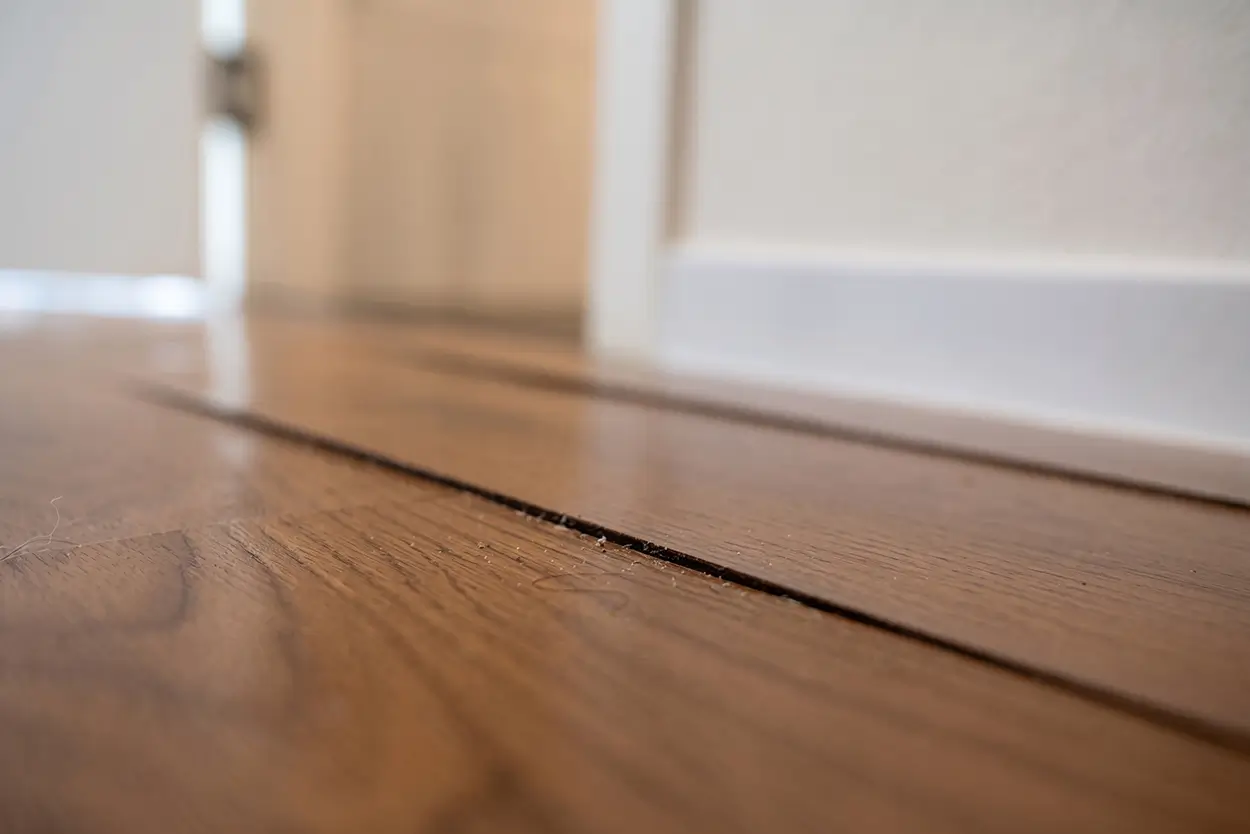
A hardwood floor can look perfectly tight for much of the year, then develop thin spaces between the boards once cooler weather settles in. Seeing those lines for the first time can be concerning. Did the flooring fail? Was it installed incorrectly?
Often, neither is true. Hardwood floor gaps in winter are commonly caused by the way real wood responds to changes in indoor humidity. The boards lose moisture when the air becomes drier and shrink slightly across their width. Depending on the floor and indoor conditions, those spaces may narrow or disappear once humidity increases again.
Still, not every gap should be dismissed as seasonal. Size, location, and whether the gaps change during the year can tell you quite a bit about what’s happening.
Why Dry Winter Air Changes Hardwood
Wood is hygroscopic, meaning it gains and loses moisture as conditions around it change. That movement continues long after the flooring has been manufactured and installed.
Why do hardwood floors gap in winter? Indoor heating is a big part of the explanation. During cooler weather, heated indoor air often has lower relative humidity. Hardwood responds by releasing moisture and contracting. Small openings can then become visible between neighboring boards.
When indoor humidity rises again, the boards may take on moisture and expand. That’s why a floor that looks slightly separated in January may look tighter later in the year.
In The Woodlands and the greater Houston area, winters are milder than they are in many parts of the country. Even so, indoor heating and shifts in humidity can still change the moisture content of wood flooring.
Crack Repair Should Happen Before Epoxy
Proper concrete crack repair before applying epoxy gives the coating a better surface to bond to. Simply pouring filler into a crack and coating over it isn’t enough.
The damaged area first needs to be cleaned and prepared. The repair material should also be appropriate for the condition of the concrete and compatible with the planned coating system. Once the repair has fully cured, the area can be leveled as needed before the rest of the floor is prepared.
There’s no benefit to rushing this stage. A repair that looks acceptable on installation day may become visible again if the underlying problem wasn’t handled correctly.
Some Floors Show Seasonal Movement More Than Others
Not every hardwood floor reacts in exactly the same way. Wood species, plank dimensions, construction, installation method, and indoor conditions can all affect how noticeable the movement becomes.
Plank width is one consideration. Because wider solid-wood boards have more material across their width, dimensional changes can be more noticeable than they are with narrower boards. Engineered hardwood is constructed to provide greater dimensional stability, although it can still respond to environmental conditions.
These seasonal hardwood floor gaps are usually most noticeable during dry periods. If the openings are narrow, fairly consistent, and close again as indoor humidity changes, they may simply be part of the floor’s normal seasonal cycle.
Trying to fill those spaces immediately isn’t always wise. A filler placed into a normal winter gap can be squeezed or pushed out when the wood expands again.
When a Gap Deserves a Closer Look
The calendar alone shouldn’t determine whether a floor needs repair.
If several gaps remain wide throughout both humid and dry periods, or if only one section of the floor has separated while the rest remains unchanged, the floor deserves a closer look.
Persistent openings can have several possible causes, including installation issues, damaged boards, moisture problems, or movement within the flooring system. Gaps accompanied by loose boards, significant squeaking, cupping, buckling, or cracking are another reason to have the floor evaluated.
Water exposure is particularly important to investigate. A leaking appliance, plumbing problem, or moisture entering from below can affect hardwood in ways that have little to do with ordinary winter shrinkage.
How to Prevent Hardwood Floor Gaps From Becoming Excessive
You can’t prevent natural wood from responding to its surroundings, nor would you want to. What you can do is reduce extreme swings in indoor conditions.
For homeowners researching how to prevent hardwood floor gaps, humidity control is a sensible place to start. Rather than aiming for one universal number, follow the indoor relative humidity recommendations provided by your flooring manufacturer. Keeping conditions reasonably stable throughout the year helps limit dramatic expansion and contraction.
A hygrometer makes it easy to see how dry the house becomes when the heat is running. If indoor humidity regularly falls below the recommended range, an appropriately sized humidification system may help.
Everyday care matters, too. Clean spills promptly, watch for leaks, and use cleaning methods intended for hardwood rather than soaking the surface with water. Those habits help avoid the opposite problem: exposing the wood to excessive moisture.
Know When the Floor Needs Repair
If winter gaps are modest and disappear as conditions change, repair may not be necessary at all. Persistent or unusually large openings are different.
A flooring professional can inspect the boards, check for movement or damage, and look for clues about moisture and installation. Depending on what’s found, the solution might involve securing or replacing individual boards, correcting a moisture problem, or addressing another issue beneath the finished surface.
That assessment matters because filling a gap isn’t necessarily the same as fixing it. The right repair depends on why the opening formed in the first place.
Trusted Hardwood Flooring Repair in The Woodlands and Greater Houston
If your hardwood floor gaps in winter and you’re unsure whether you’re seeing normal seasonal movement or a repair issue, Flooring Pros can help. We serve homeowners throughout The Woodlands and the greater Houston area, evaluating existing hardwood floors and recommending solutions based on their actual condition rather than simply covering the visible gaps.
If you’re looking for hardwood flooring repair in The Woodlands, TX, our team provides free in-home estimates, precise measurements, and guidance from knowledgeable Design Associates. Whether you’re dealing with seasonal hardwood floor gaps, loose or damaged boards, or an aging floor that needs professional attention, we’ll help you determine the right next step.
Contact Flooring Pros today to schedule your free in-home estimate and give your hardwood floors the professional care they need to stay beautiful for years to come.