
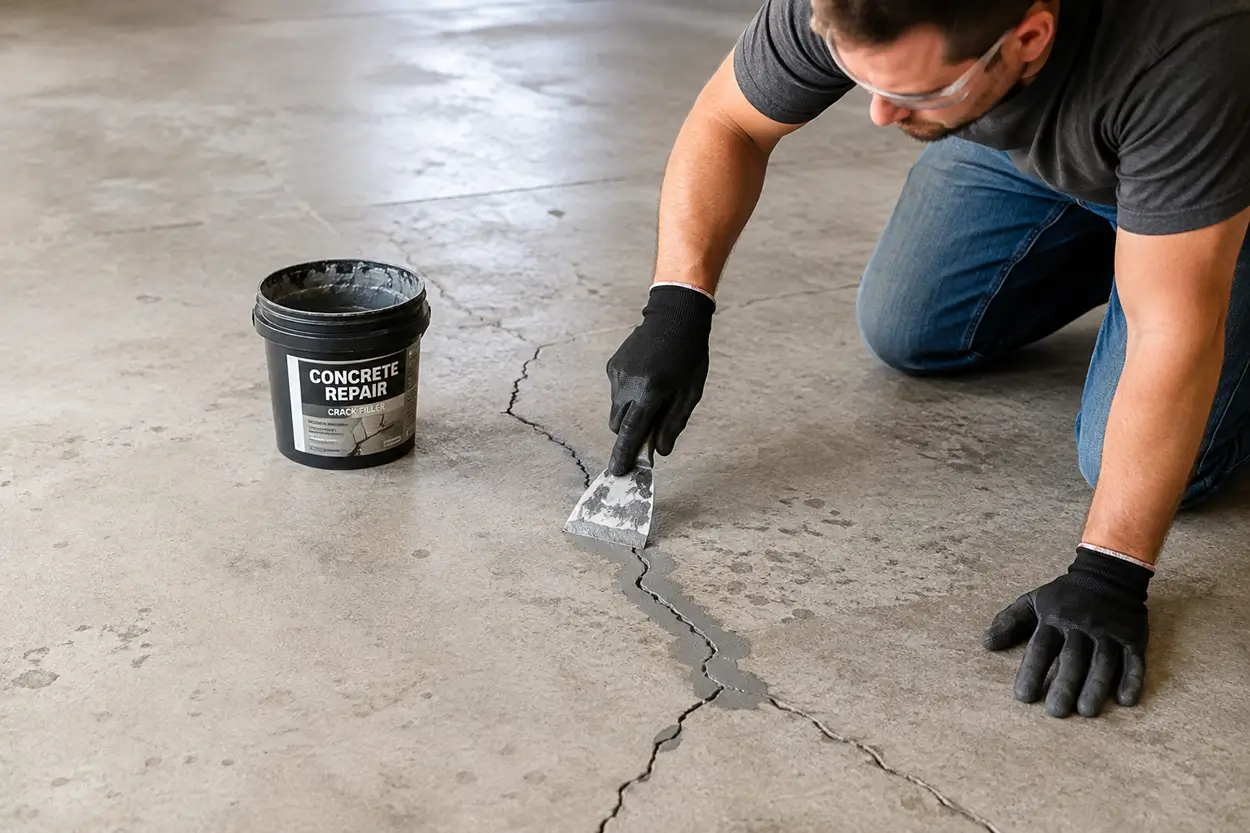
A crack in your garage floor doesn’t necessarily rule out epoxy. Concrete cracks for several reasons, and some are far more concerning than others. A thin, stable crack may simply be the result of normal concrete shrinkage. A crack that continues to widen or sits higher on one side can point to movement that needs a closer look.
That difference matters when deciding whether epoxy flooring over cracked concrete is the right option for your space. Epoxy can create a durable, finished surface, but it shouldn’t be treated as a way to hide problems in the concrete slab. The slab needs to be evaluated and properly prepared before any coating is applied.
Start by Finding Out Why the Concrete Cracked
Homeowners often ask: Can epoxy flooring be installed over cracked concrete? In many cases, it can. The important part is knowing what kind of crack you’re dealing with.
Small, stable cracks are fairly common in concrete. They can develop as the slab cures and shrinks, and they don’t always indicate a structural problem. These areas can often be repaired during preparation for an epoxy coating.
Active cracks are another story. If the slab is moving because of settlement, soil movement, ongoing moisture problems, or another structural condition, coating it won’t stop that movement. The crack can eventually affect the new surface as well.
Before anything is covered, it makes sense to determine whether the crack is stable or still changing.
Crack Repair Should Happen Before Epoxy
Proper concrete crack repair before applying epoxy gives the coating a better surface to bond to. Simply pouring filler into a crack and coating over it isn’t enough.
The damaged area first needs to be cleaned and prepared. The repair material should also be appropriate for the condition of the concrete and compatible with the planned coating system. Once the repair has fully cured, the area can be leveled as needed before the rest of the floor is prepared.
There’s no benefit to rushing this stage. A repair that looks acceptable on installation day may become visible again if the underlying problem wasn’t handled correctly.
The Entire Slab Needs Preparation
A repaired crack is only one part of the job. The rest of the concrete matters just as much.
Garage and workshop floors, for example, may have years of oil, grease, dirt, sealers, paint, or other residue on them. Epoxy needs a properly prepared surface to bond effectively. Mechanical preparation, such as grinding, is commonly used to remove contaminants and create the surface profile required by the coating manufacturer.
Moisture deserves attention, too. Concrete may look completely dry while still allowing moisture vapor to move through the slab. Depending on the coating and conditions, excess moisture can contribute to blistering, peeling, or loss of adhesion.
Of all the epoxy flooring installation tips available to homeowners, careful preparation is one of the most important. The finished coating can only perform as well as the surface supporting it.
Some Cracks Need More Investigation
Not every slab should be coated immediately.
A hairline crack and a section of concrete that has visibly shifted aren’t the same problem. Significant settlement, widespread deterioration, recurring water intrusion, or cracks with vertical displacement may call for further evaluation before an epoxy project moves forward.
In those situations, repairing the concrete or addressing the source of the movement comes first. Once the slab is stable, a flooring professional can determine whether epoxy is still a suitable choice.
This approach may add another step to the project, but it can prevent a much more frustrating repair later.
What You Can Expect From a Properly Installed Epoxy Floor
When the slab is suitable and preparation is done correctly, epoxy offers several practical advantages. The cured coating forms a hard surface that can stand up to regular foot traffic and many of the spills and stains commonly encountered in garages and work areas. It also gives unfinished concrete a cleaner, more polished appearance.
Epoxy is relatively easy to maintain. Routine sweeping and appropriate cleaning are generally enough for everyday care. Available finishes can also give property owners some flexibility in how the space looks.
Still, no coating is indestructible. Its performance depends on the epoxy system used, the quality of the installation, the condition of the slab, and how the space is used afterward.
That’s why professional installation can be worthwhile. Experienced installers know how to assess concrete, prepare the surface, follow product requirements, and allow the necessary curing time instead of treating every slab exactly the same.
Dependable Epoxy Flooring Installation in The Woodlands and Greater Houston
If cracks are making you wonder whether epoxy flooring over cracked concrete is the right solution for your space, Flooring Pros can help you find the answer before any coating is applied. We help homeowners throughout The Woodlands and the greater Houston area evaluate concrete conditions, identify necessary repairs, and prepare surfaces for a long-lasting epoxy floor.
If you’re looking for epoxy flooring installation in The Woodlands, TX, our team provides free in-home estimates, accurate measurements, and guidance from knowledgeable Design Associates. We can assess existing cracks, explain whether concrete crack repair before applying epoxy is needed, and recommend flooring solutions that fit your space and budget.
A quality epoxy floor starts with a properly prepared concrete surface. Contact Flooring Pros today to schedule a free estimate and have your concrete evaluated before starting your project.