
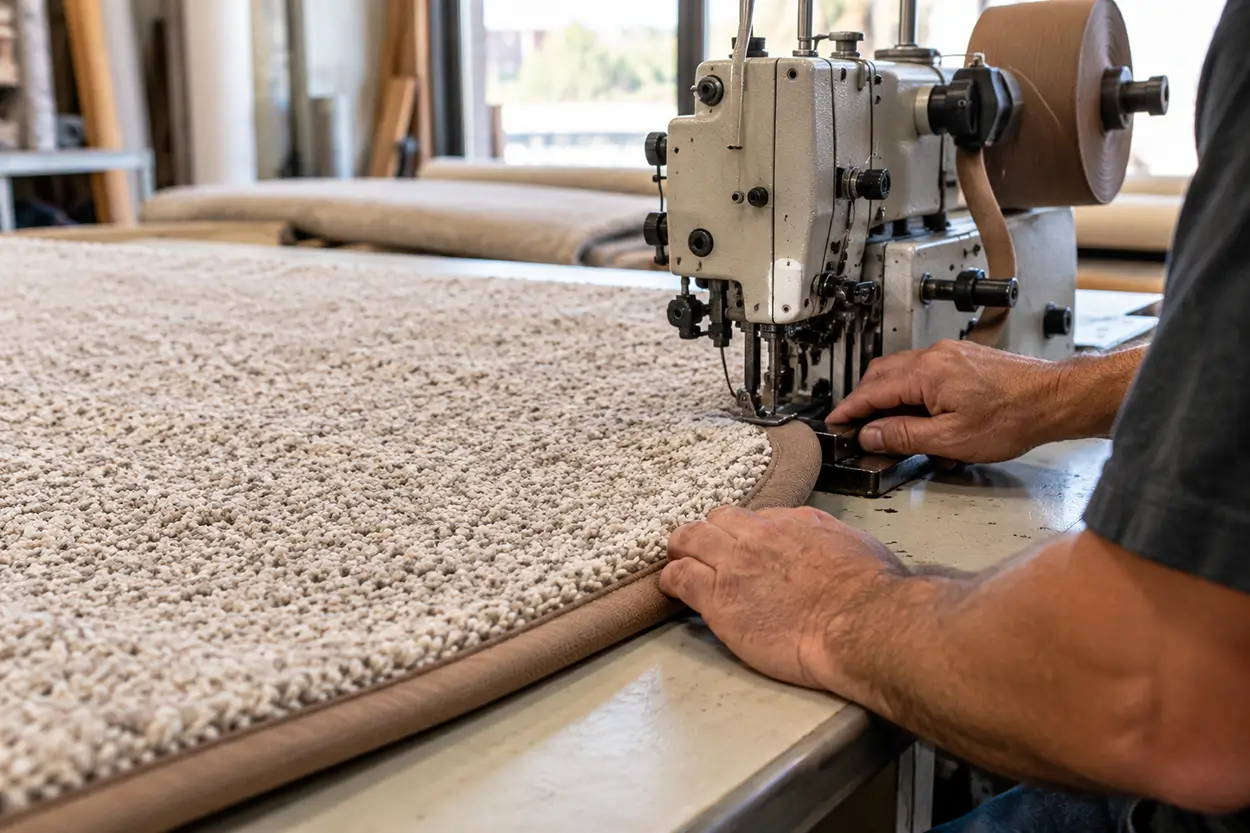
A flooring project can leave you with a piece of carpet that is too good to throw away but too small to cover another room. It might match the new bedroom carpet perfectly, or be just the right color for a hallway that needs a little warmth. The obvious question is whether that leftover piece can become a proper area rug instead of spending years rolled up in a closet.
Often, yes. Carpet binding finishes the cut perimeter of a suitable carpet remnant so it can be used as a separate rug. But the condition of the carpet, the dimensions you need, and the edge finish all matter. A good result starts with deciding whether the piece is worth working with.
What Carpet Binding Actually Does
Wall-to-wall carpet usually disappears beneath trim or is secured along the room’s edges. An area rug is different: its perimeter stays exposed every day, where shoes, vacuum cleaners, and furniture can catch loose yarns. Carpet binding covers and finishes that raw edge, giving the piece a cleaner outline and helping protect it against unraveling.
A conventional bound edge uses narrow fabric tape secured around the carpet’s perimeter. Another finish, called serging, wraps yarn around the edge for a more rounded, stitched appearance. These treatments are not interchangeable in every situation, and their availability varies by shop. For a homeowner, the practical distinction is how the border looks, feels, and works with the carpet itself.
Is Your Leftover Carpet Suitable for a Rug?
Start with the piece you actually have, not the rug you wish it could become. A clean, unused offcut left after installation is usually a more promising candidate than carpet removed from a floor after years of wear. Look for a sound backing, reasonably straight usable edges, and enough material to trim away irregular sections without making the finished rug too small.
If the carpet has water damage, a persistent odor, loose backing, deep creases, or worn spots, binding will not repair those problems. A border can finish the perimeter, but it cannot restore damaged material or make a distorted piece lie flat. That is a good reason to have the remnant assessed before paying for the work.
Pattern matters, too. A striped or directional design can look awkward if the usable section is cut against its natural orientation. Even a plain carpet may show a different shade when its pile is brushed or viewed from the opposite direction. Lay the piece in the intended room and look at it in daylight before settling on the final shape.
Measure the Space Before You Cut the Carpet
A leftover piece may be large enough to bind, yet still be a poor fit for the place you have in mind. Sketch the floor area and mark where chairs move, doors swing, and people walk. Then check the remnant against that footprint. Leave room for any trimming needed to straighten its sides or remove damaged edges.
For a reading nook, a small rug might only need to sit beneath a chair and footstool. In a living room, the arrangement of sofa legs and tables may call for a larger rectangle. A hallway runner needs enough clearance that doors do not scrape against the finished edge. Trying the layout with painter’s tape on the floor can reveal a size problem before anything is cut.
What Happens When a Carpet Remnant Is Bound?
The work generally begins with checking the remnant’s condition, measuring the intended finished dimensions, and trimming it to a workable shape. The cut edges are then finished using the appropriate method and equipment. The exact process depends on the carpet construction, the finish selected, and the service provider’s equipment.
A professional may also need to discuss a nonslip rug pad or backing arrangement, particularly when the rug will sit on a smooth hard floor. A bound edge is not the same thing as slip resistance. If the finished rug shifts underfoot, its placement and backing deserve attention rather than an assumption that binding alone makes it secure.
Will Binding a Remnant Save Money?
It can make sense when you already own a useful piece of carpet, especially if a standard store-bought rug will not fit the space. But the remnant itself is only one part of the decision. Edge finishing, cutting, additional backing or a pad, and the amount of usable material can affect the total.
Ask for an estimate based on the finished dimensions, not just the rough size of the leftover piece. Compare that amount with a suitable ready-made rug, and consider whether an exact color match or custom fit is worth something to you. A smaller remnant with a complicated shape may not automatically be the less expensive option.
Questions to Ask Before You Commit
Bring the remnant’s measurements, a photo of its front and backing, and the size you hope to achieve. Ask whether the material can be finished neatly, whether it needs trimming, which edge treatments are available, and whether the quote includes cutting and finishing. If the rug will be used over hardwood, tile, or vinyl, also ask what type of pad or backing is appropriate for that surface.
One question often gets overlooked: what will the finished edge look like against your carpet color? An understated border can make the rug feel like part of the room, while a contrasting trim can be more noticeable. Seeing a physical sample is more useful than guessing from the name of a finish.
Give That Leftover Carpet a Useful Second Life
If your carpet remnant is in good condition and has enough material for the space you want to cover, binding may turn it into a rug you will actually use. The next step is a realistic assessment of the piece and the finished size, not a promise that every offcut can be transformed.
Flooring Pros offers carpet binding and area rug options for homeowners exploring a more tailored fit. To discuss your remnant, finishing options, and the next steps, contact Flooring Pros.