
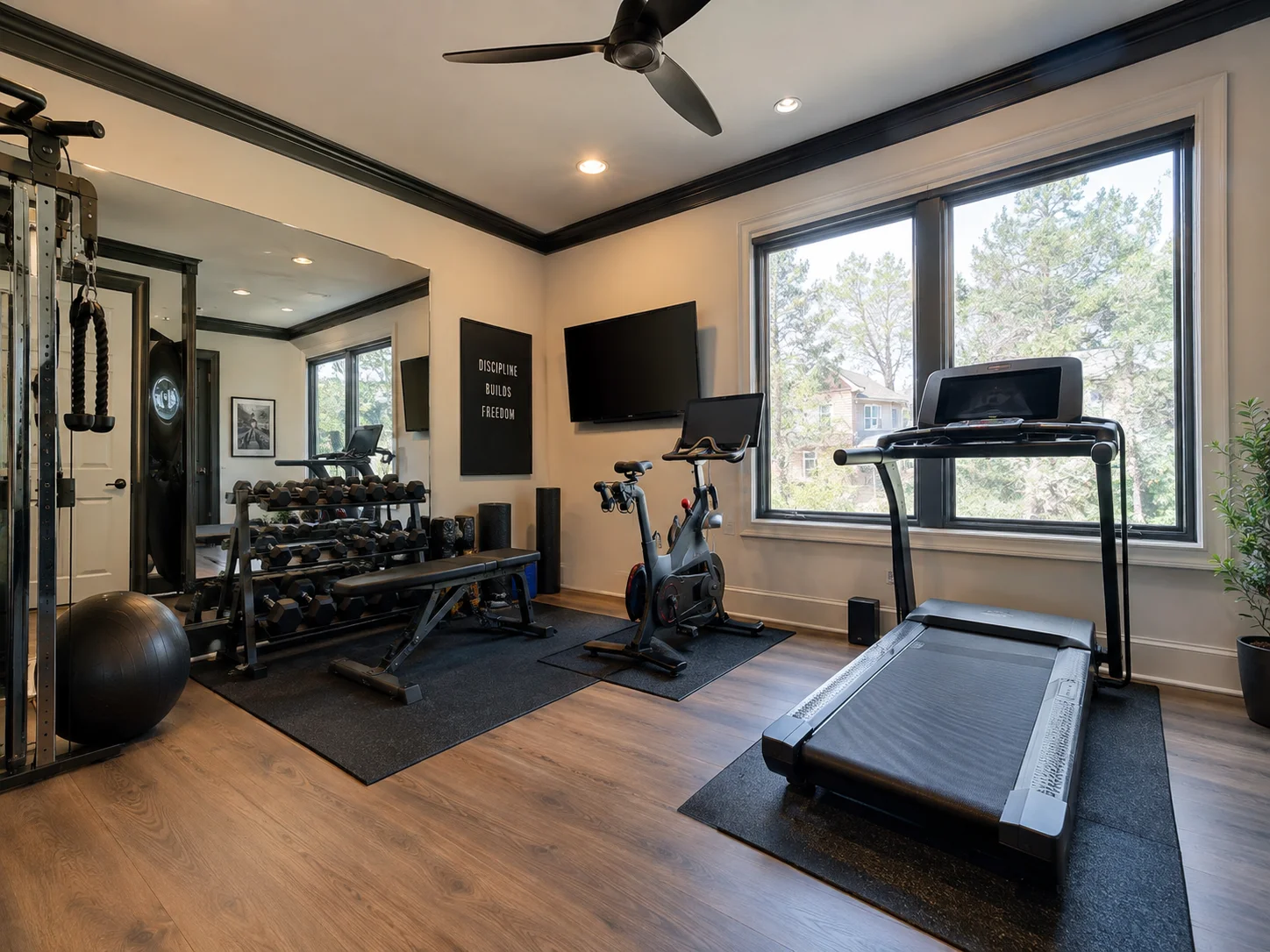
Setting up a home gym usually starts with the exciting decisions. You choose the treadmill, decide where the weight rack will go, and figure out whether there is enough room to stretch without knocking into a wall.
Flooring often comes later, but it has a bigger job than simply making the room look finished. A gym floor has to deal with heavy equipment, repeated foot traffic, sweat, vibration, occasional dropped weights, and sometimes much more noise than the room handled before it became a workout space. The surface also needs to fit the room if it serves as an office, bedroom, or garage when you are not exercising.
Choosing the best flooring for home gym use is therefore less about finding one universally superior material and more about matching the floor to the way you exercise. The right choice depends on the equipment you own, the intensity of your workouts, where the gym is located, and how you want the room to function over time.
Start With What You Actually Do in Your Gym
A home gym built around yoga and a stationary bike puts very different demands on the floor than one with a power rack, barbells, and heavy dumbbells. For lower-impact exercise, comfort, appearance, and ease of cleaning may be the biggest priorities. Once heavy strength equipment enters the room, impact protection and resistance to dents become much more important.
An upstairs gym introduces another concern because every footfall or dropped object can send vibration into the rooms below. The location of the gym matters too, since a spare bedroom usually needs to keep looking like part of the home while a garage gym can lean much further toward function. Thinking about those details first makes it much easier to narrow down the right home gym flooring.
Heavy Weight Training Needs Extra Impact Protection
For serious weightlifting, rubber remains one of the most practical surfaces available. It absorbs impact, provides traction, helps reduce noise, and protects the floor underneath from equipment and dropped weights. Those qualities make it especially useful around racks, benches, dumbbell areas, and other zones that take repeated punishment.
That does not necessarily mean the entire room needs permanent wall-to-wall rubber flooring. In a home where the gym may eventually become a bedroom, office, or bonus room again, heavy rubber mats can be placed strategically under a weight rack, bench, or free-weight area. This gives the most demanding part of the gym extra protection while allowing the permanent flooring underneath to remain attractive enough for everyday residential use.
Thickness matters when weights are routinely dropped, because a thin exercise mat designed for stretching is not the same thing as dense rubber protection intended for strength training. The more impact the floor is expected to absorb, the more important it becomes to use a product designed for that purpose rather than relying on a lightweight fitness mat.
Luxury Vinyl Plank Works Well for Multipurpose Home Gyms
For homeowners who want their workout room to still feel like part of the house, luxury vinyl plank is worth serious consideration. It creates the warm appearance of wood without many of the moisture concerns associated with natural hardwood. It is also easy to clean, which matters in a room where sweat, water bottles, athletic shoes, and regular foot traffic are part of the routine.
Quality vinyl plank can be a practical choice for a gym that includes treadmills, exercise bikes, rowing machines, resistance training, or lighter free weights. Protective mats should still go beneath heavy machines and weight stations so concentrated loads and repeated impact are not transferred directly to the finished floor. That extra layer can also make it easier to rearrange equipment later without worrying as much about marks in high-use spots.
This combination can work especially well in a home office or spare room that doubles as a gym. The floor still looks appropriate when the exercise equipment is removed, while the room remains easy to clean after regular workouts.
Epoxy Makes Sense for Many Garage Gyms
A garage presents a different set of conditions from an interior bonus room or bedroom. Instead of trying to make a workout space blend seamlessly with the rest of the house, homeowners can focus more heavily on durability, cleanup, and how the floor performs over concrete.
A properly installed epoxy floor creates a hard, seamless surface over concrete that is easy to clean and well suited to garage environments. It can give the space a much more finished appearance than bare concrete while standing up to regular foot traffic and equipment. For homeowners who use the garage for both workouts and everyday household purposes, that versatility can be appealing.
Epoxy is durable, but it is not a cushioned gym surface. If you lift heavy weights, adding rubber mats or a dedicated lifting area over the epoxy is still a smart move because the rubber helps absorb repeated impact. In that setup, the epoxy provides the permanent finished floor while the rubber protects the coating and your equipment where the workouts are hardest on the surface.
Engineered Hardwood Can Work for Lower-Impact Exercise
A room used primarily for yoga, Pilates, stretching, light resistance training, or an exercise bike does not necessarily need flooring that looks like it came from a commercial gym. Engineered hardwood can work beautifully in those settings, particularly when the room serves another purpose as well. It gives the space the appearance of the rest of the home and is generally more dimensionally stable than solid hardwood.
The tradeoff is that wood requires more protection from equipment. Heavy machines can leave dents or scratches if they sit directly on the surface, and repeated impact from dumbbells can damage the finish or the boards themselves. Equipment mats and careful placement therefore become much more important in a workout room with a wood floor.
For homeowners who care strongly about aesthetics and plan mostly low-impact workouts, that tradeoff may be perfectly reasonable. A room built around frequent heavy lifting, however, calls for a more forgiving surface or substantial protection over the wood.
What About Laminate?
Laminate shares some of vinyl’s visual versatility and can provide a durable surface for light to moderate home workouts. Modern laminate also offers good resistance to everyday scratches and wear, which can make it workable in a multipurpose room.
Still, it would not be the first choice for a space where heavy weights are regularly used. The wood-based core found in many laminate products can be vulnerable if significant moisture reaches the joints, and heavy impact can damage individual boards. For a treadmill, stationary bike, yoga setup, or lighter workout room, laminate can work with suitable equipment mats, while a dedicated strength-training room calls for something more impact tolerant.
Tile Is Durable, but Not Necessarily Gym-Friendly
Ceramic and porcelain tile are durable, moisture-resistant, and easy to clean. Those qualities sound ideal for a gym until impact and comfort enter the picture. Tile is extremely hard underfoot, which can make floor exercises uncomfortable without additional cushioning.
Dropping a heavy dumbbell onto tile also creates a different risk than dropping it onto rubber. The weight can damage the tile, while the hard surface offers little protection for the equipment itself. Tile can still work in a room built around cardio equipment or light exercise, especially when protective mats are used, but it is not the most forgiving flooring for home gym spaces where free weights play a major role.
Carpet Works Better for Some Workouts Than Others
Carpet can feel comfortable underfoot and does a reasonable job of softening sound, which makes it appealing for stretching, yoga, and lighter bodyweight exercise. In a room that still functions as a bedroom or den, it can also keep the space from feeling like a dedicated fitness facility.
The downside appears when workouts become sweaty or equipment gets heavier. Carpet is more difficult to wipe clean than a hard surface, machines can leave deep impressions, and thick pile may not provide the stable base that certain exercise equipment needs. Low-pile carpet is generally more practical than plush residential carpet if the room is going to double as a fitness area, and protective mats beneath machines can help spread their weight and provide a firmer surface.
Don't Forget the Floor Under the Floor
Choosing durable flooring for home gym use is only part of the decision. The subfloor underneath it also needs to suit the equipment, flooring system, and location of the room.
That deserves particular attention when a gym contains very heavy equipment or is located upstairs. A large rack, weight plates, machines, and the person using them can place a substantial concentrated load in a relatively small area, so homeowners planning unusually heavy setups may want professional guidance before installation. Garage gyms bring another consideration because flooring installed over concrete should be planned with the condition of the slab and possible moisture exposure in mind.
Professional installation can also help prevent movement around transitions, seams, and equipment-heavy areas. A beautiful flooring product will not perform at its best if the surface underneath was not properly prepared or the installation method does not suit the room.
The Best Choice May Be a Combination
One of the most practical home gym designs uses more than one type of surface. A permanent floor can provide the look and everyday durability the room needs, while targeted mats handle the specific areas exposed to greater impact.
Imagine a bonus room with vinyl plank throughout. A treadmill and stationary bike sit on equipment mats, while a thicker rubber section protects the free-weight corner. The room still looks like a finished part of the home, but the areas taking the most abuse have additional protection where it matters.
A garage gym might use epoxy as the permanent floor with rubber over the lifting zone, while a room dedicated to yoga and Pilates might need only an attractive hard floor with a quality exercise mat brought out during workouts. That is why the best flooring for home gym spaces depends less on a simple ranking of materials and more on how the room is actually going to be used.
Choosing Home Gym Flooring in The Woodlands
The right floor should make your gym easier to use rather than becoming something you constantly worry about. Think about your heaviest equipment, how often weights may hit the floor, whether sweat and moisture will be frequent, how much noise matters, and whether the room could serve another purpose later.
If you’re planning home gym flooring in The Woodlands, Flooring Pros can help you compare options based on the room itself and the workouts you plan to do there. For a multipurpose indoor gym, their vinyl plank flooring options can provide an attractive, easy-care foundation, while homeowners converting a garage can explore professionally installed epoxy floors and add appropriate impact protection where heavy lifting takes place. A home gym works best when every part of the room supports the way you exercise, and that starts with what is under your feet.